

This essay originally appeared on Thesis Driven.
A working-class tenement built in New York in 1910 has more depth than most luxury towers going up today, and in many cases, greater durability as well. The facades carry real weight, window openings are set back rather than flush, and materials were chosen to weather for decades. Walls are thick enough to hold shadow. Light doesn’t flood, it pools.
These buildings were not expensive by the standards of their time, yet the baseline quality of construction often exceeds what is delivered in many projects today. In Celtic tradition, “thin places” describe landscapes that feel spiritually charged or unusually present. Buildings can feel that way too -- but, paradoxically, only when their edges have thickness. Today, that’s increasingly rare.
Walk through almost any American city built after 1970 and you can see what replaced it.
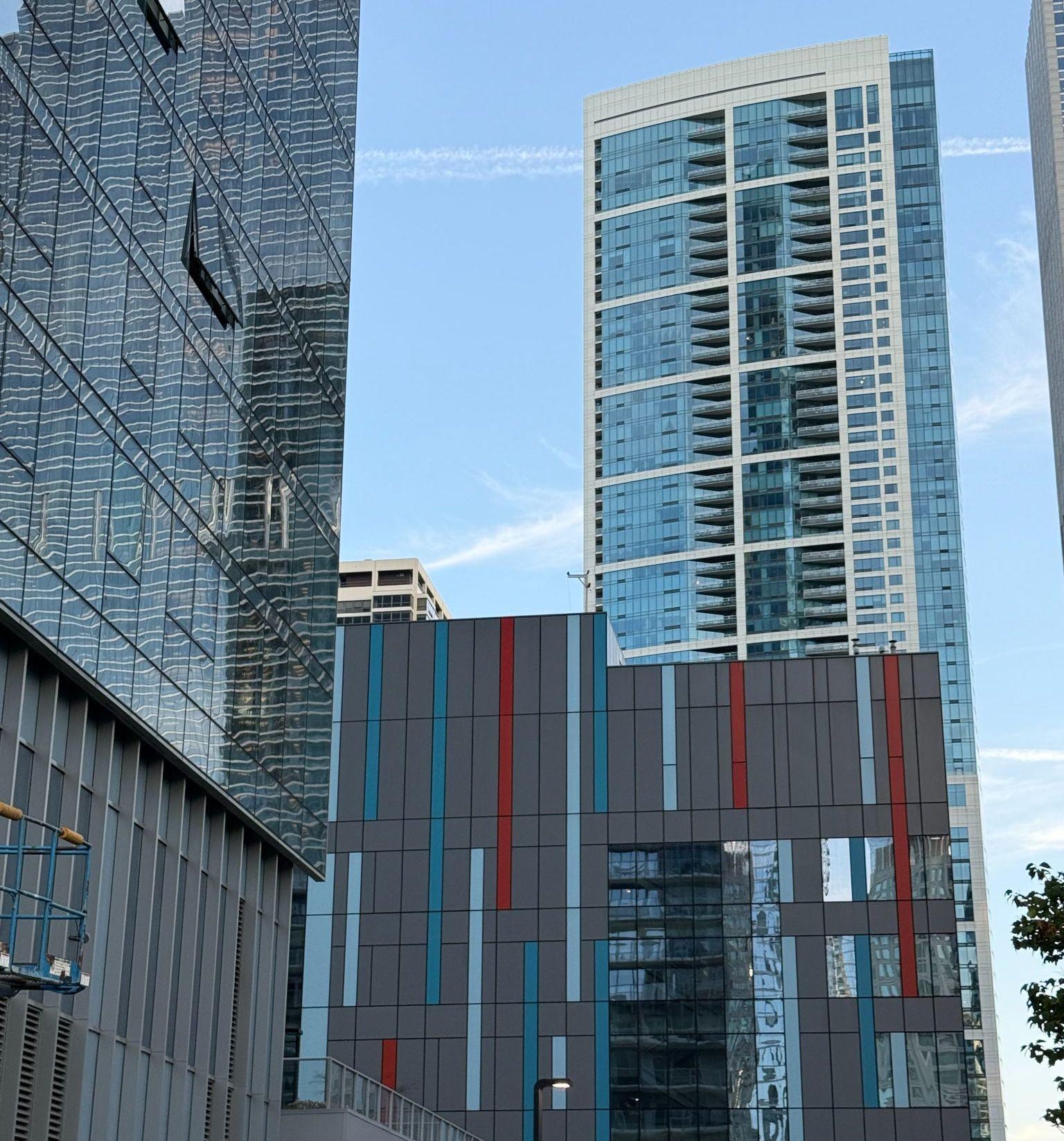
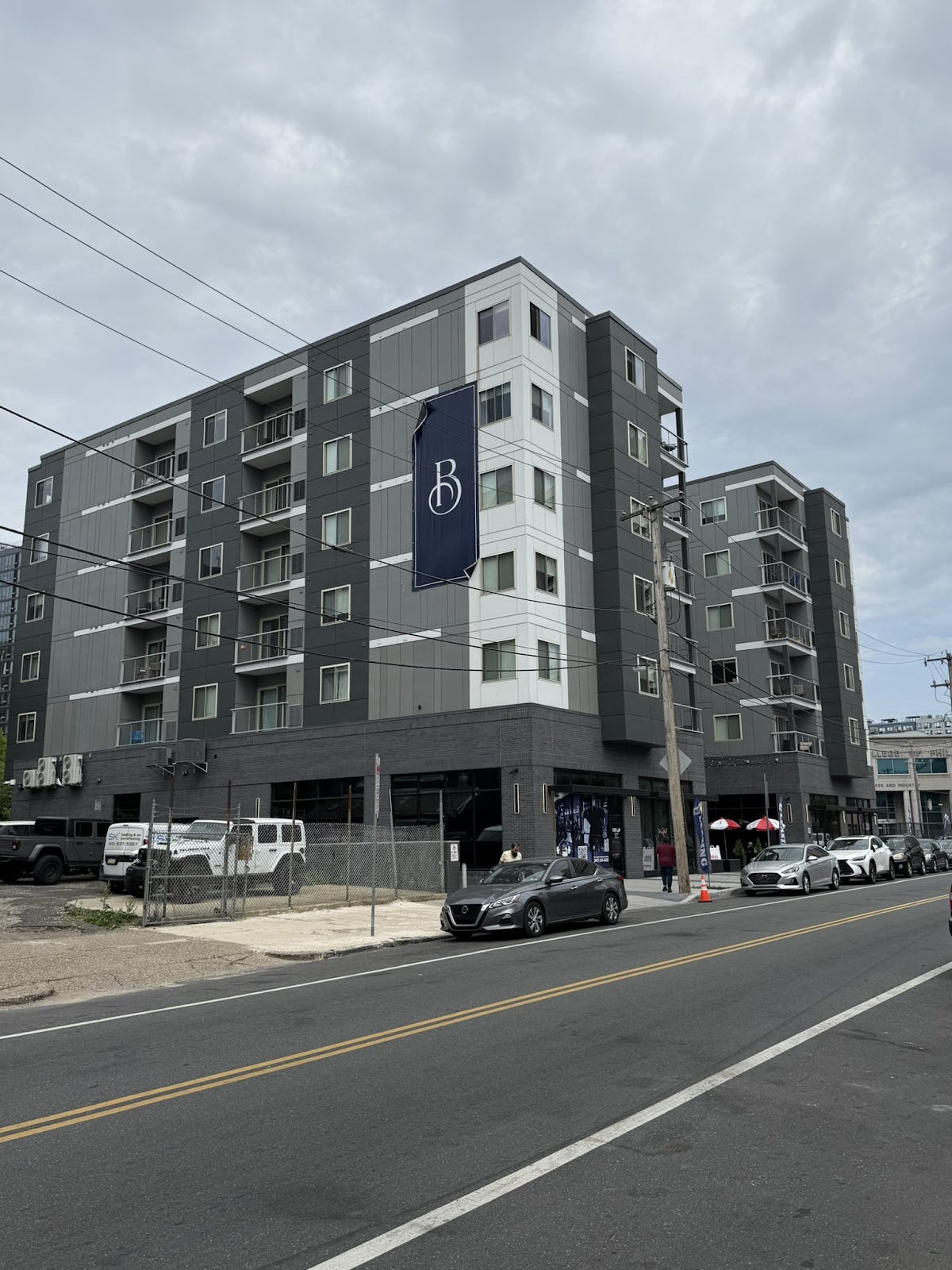
The skyline is taller, the glass is shinier, but the buildings are flat. Aluminum panels, thin brick veneer, floor-to-ceiling windows that look good in a rendering but leave you squinting at 2 p.m. Ground floors are dead glass walls or blank concrete; lobbies are designed to photograph well but not to endure.
None of it will outlast its first tenant.
So why did everything change? It’s tempting to call it a taste problem. Architects got weird, developers got cheap, and modernism became an aesthetic people tolerated rather than loved. But that’s not the full story.
Beauty in buildings did not simply fall out of fashion. They became economically separated from structure. Once stone and brick stopped carrying loads and became applied skins, depth turned into an added cost rather than a natural condition. Labor markets made craft scarcer and more expensive, financial models shortened time horizons, and delivery systems increasingly optimized for speed and predictability over durability.
Thin buildings are not a stylistic mistake; they are the logical product of how modern real estate is financed, organized, and built. And changing that won’t come from taste or regulation alone. It will come from making thickness cheap again.
For most of human history, brick and stone served dual purposes. They held buildings up and they looked beautiful doing it. Structure and surface were the same material; depth and ornament were embedded in the act of construction itself. A thick stone wall holds shadow by default. Deep window openings are a structural consequence, not a stylistic choice.
John Ruskin said no building is truly great without “mighty masses” and added that any young architect should learn to “think in shadow.”
Steel and concrete changed that structural logic. Buildings could span wider and rise higher without sacrificing valuable floor space. A masonry building that exceeds a few stories requires walls several feet thick at the base to support the loads above (which is rentable square footage lost on every floor). But a steel frame can go twenty stories on slender columns.
After the Home Insurance Building in Chicago proved the concept in 1885, steel and concrete became the default structural system for commercial construction within a generation.
The structural case for steel was real, but the side effect was that stone went from being the building to being a layer on the building. Structure and skin became separate trades and separate line items. Once the skin was decorative rather than structural, it became the first thing to get cut when project costs ran over.
At first, architects and developers didn’t value-engineer stone out. They revered traditional building aesthetics and adorned buildings with masonry that appeared structural (even when the steel frame did the real work). From 1880 to 1940, developers of working-class tenements in NY and Boston routinely spent 3–5% of a building’s cost on ornament. On higher-profile public buildings, the percentage was often much higher. The New York Appellate Courthouse, built in 1896, reportedly used 25% of its budget on stone sculpture alone.
But as labor and materials costs rose, the bond between structure and skin was broken. Ornament ceased to be embedded and became discretionary.
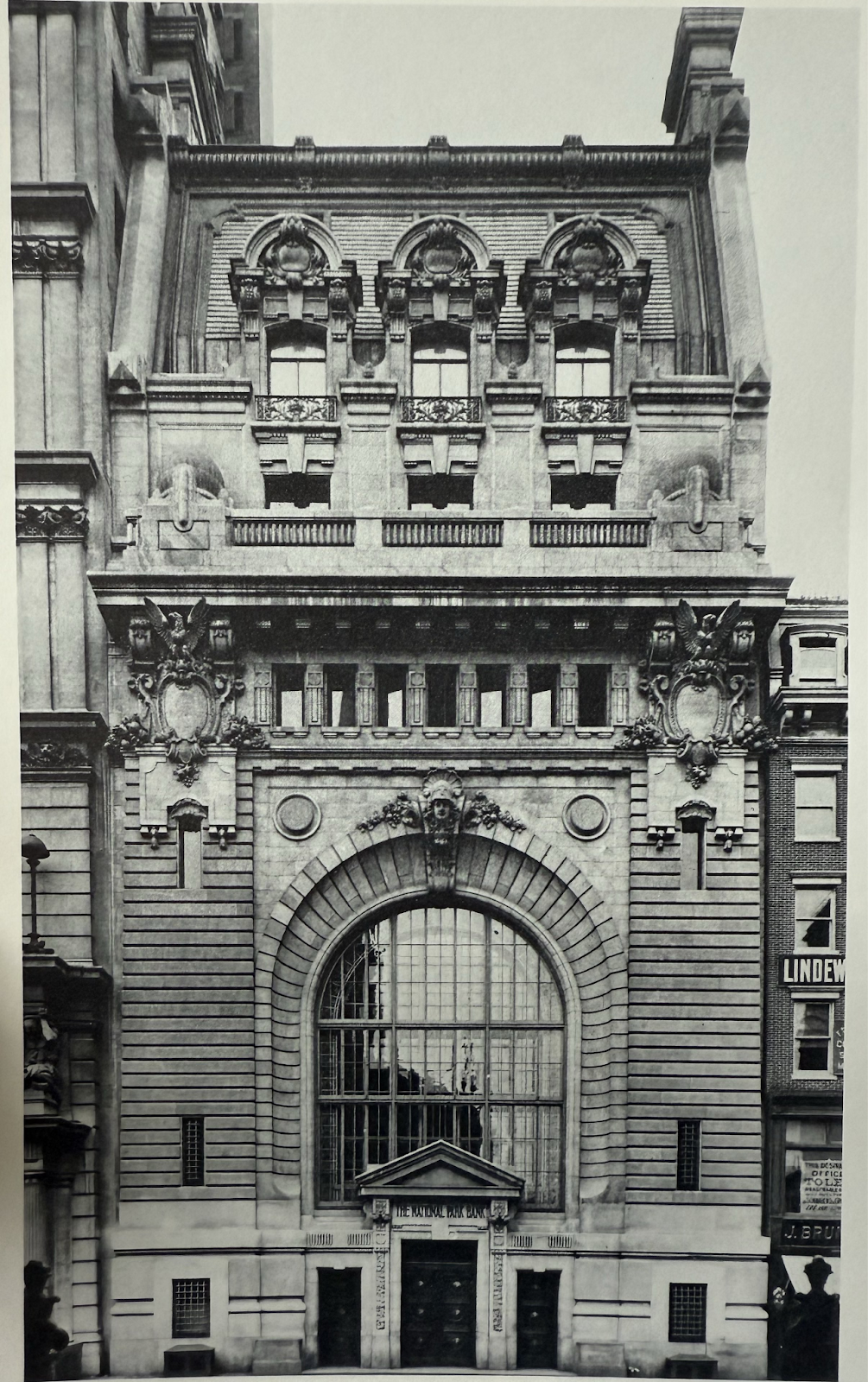
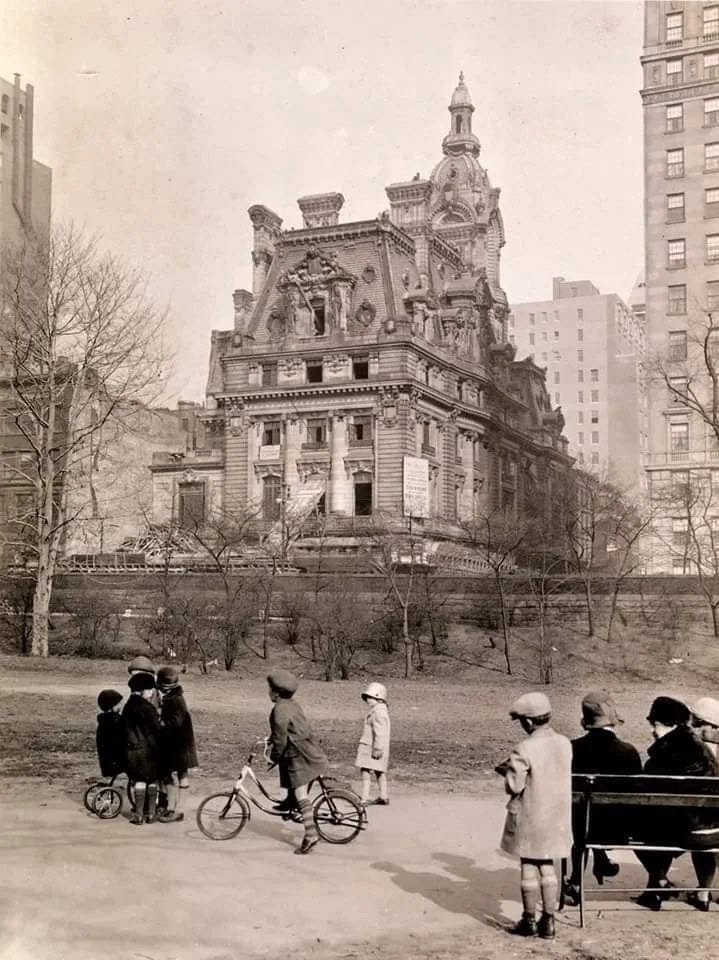
Modernism carried a moral confidence that ornament was waste, history was baggage, and the machine age needed a new aesthetic.
After World War II, the International Style became dominant in commercial architecture worldwide. In many circles, austerity was not a compromise but a virtue. Flatness, repetition, and exposed structure were framed as honesty.
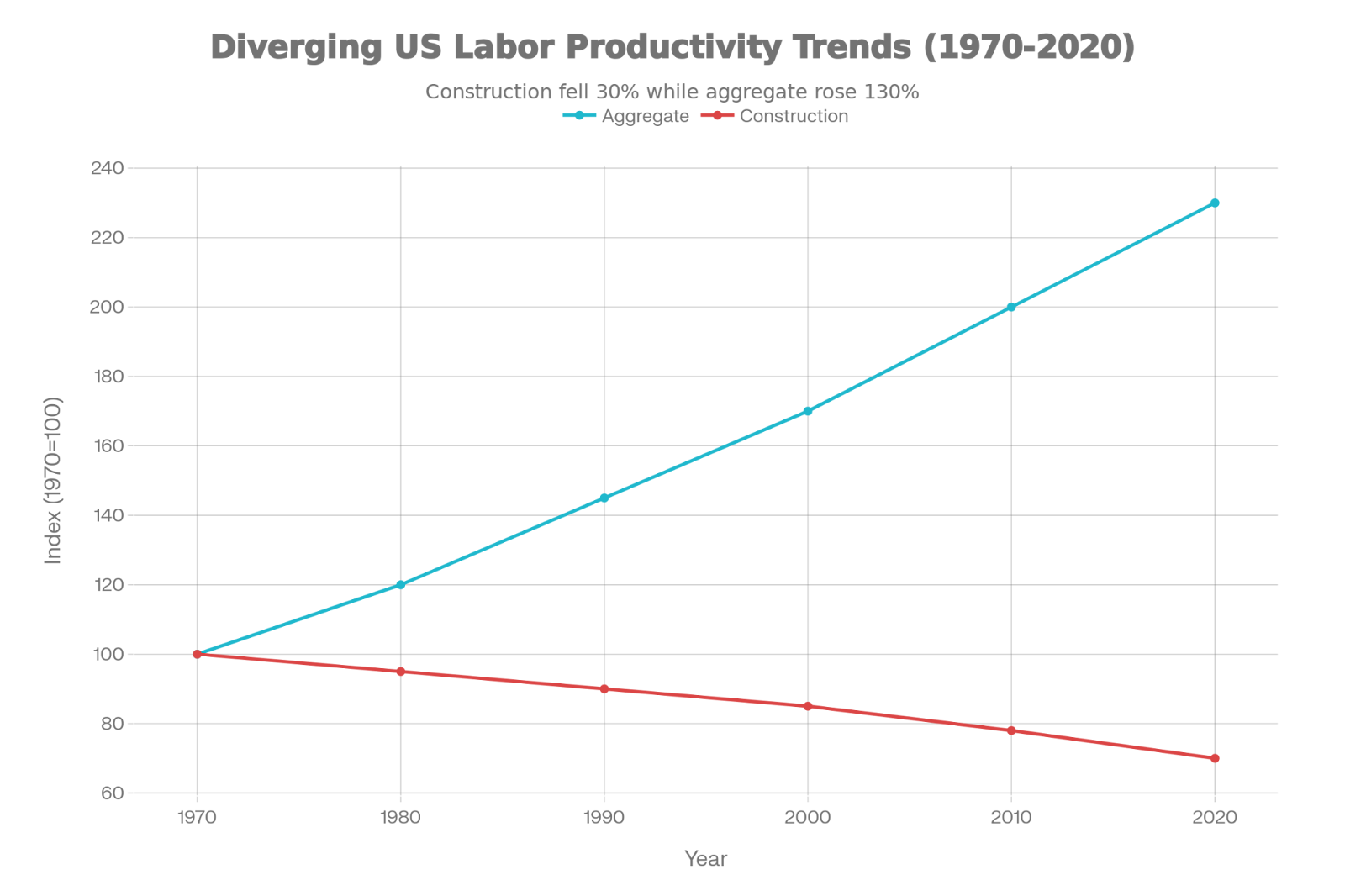
Moreover, ornament has an inherent cost problem: labor. Stone carving requires skill, apprenticeship, and time. Wars decimated skilled workforces in Europe. When labor got expensive, craft became a luxury good even when the underlying material was abundant. The gap between industrially produced goods and handcrafted goods widened -- a textbook example of Baumol’s cost disease, where labor-intensive work grows more expensive over time.
For developers and their capital partners, this was a convenient ideology. An ideology that treated ornament as excess provided cover for what budgets already demanded: fewer trades, less detail, and faster delivery.
For half a century, US real estate has been the gold standard of assets. It’s leverageable, collateralized, durable, and accepted. When a building becomes a financial product wrapped around a construction process and a regulatory regime, its design and material choices often conflict with the short-term hold periods embedded in modern capital structures.
As developer Bobby Fijan tweeted, developers operate inside financial systems that demand fast, modelable returns: 7- to 10-year fund cycles, rigid IRR hurdles, and compensation schemes tied to these short term milestones. Beauty, durability, and long-term design simply don’t pencil under those horizons.
Here’s what this looks like in practice.
A developer in a mid-tier market underwrites a 100-unit multifamily project. The architect’s original design calls for a brick facade with recessed window openings and a stone base, maybe $38 per square foot installed. During the value engineering round, the lender’s pro forma needs a 6.5% yield-on-cost to hit return targets. The facade is swapped to fiber-cement panels at $18 per square foot. The window reveals go from four inches to flush, and the stone base becomes painted CMU.
No one in the room was debating beauty, the were just solving a return problem. Excel returned a red flag so beauty was strip-mined.
The same logic governs labor.
A century ago, stone setters were common tradesmen. Thousands of person-hours of ornament barely moved the budget. Today, even when the material pencils, the installation often doesn’t.
A contractor bidding on a mixed-use project in the Northeast told me he wanted to use natural stone panels for a lobby wall. The material cost was competitive. Yet the qualified stone setters in his market were booked eighteen months out.
He switched to large-format porcelain tile that his own crew could install in a third of the time. The finished wall is fine. It photographs well, but it has no depth or weight. The substitution was not aesthetic but logistical.
If thinness is the equilibrium, what breaks it?
One part is regulatory. The Trump administration recently signed an executive order titled “Making Federal Architecture Beautiful Again” and created a Beautifying Transportation Infrastructure Council at USDOT. But regulation can’t change the cost structure that produces thin products.
Another path is financial: extending hold periods and underwriting for lifecycle durability rather than optimizing exclusively for near-term yield. A wall that lasts 200 years doesn’t need the recladding that thin-skin systems require every 25 to 30 years. But most capital isn’t patient enough to underwrite that bet.
The most scalable answer is a technological one: make the components and installation of beauty much cheaper through improved prefabrication methods via robotics and automation.
A lot of what we experience as “ornament” is a structural condition. Thickness of material, deep window reveals, corners that read as corners, sills and lintels with shadow, entrances that feel cut from the wall instead of printed on it. Ornamentation belongs in buildings when it is integral to the structure.
That’s where stone gets interesting.
Stone bundles structure, mass, thermal properties, and ornamental finish, but it comes with high cost and lengthy project timelines.
Here’s the irony: stone construction should be cheap. Stone is abundant, durable, and ready to use. To make cement, by comparison, you heat raw materials in a kiln to around 1,400°C. It’s a massive industrial process.
So why don’t we build more with stone? Because fabrication remains labor-intensive and fragmented. In conventional construction, depth and real material transitions mean more trades, tighter tolerances, added coordination risk, and dependence on scarce skilled labor operating under schedule pressure.
Move that fabrication into a controlled factory, digitize it, and automate it end-to-end, and the cost structure changes. What was once a fragile, labor-heavy process becomes repeatable and scalable. Every piece of stone can be cut, milled, labeled, checked, and packed for installation. On-site assembly becomes dramatically simpler.
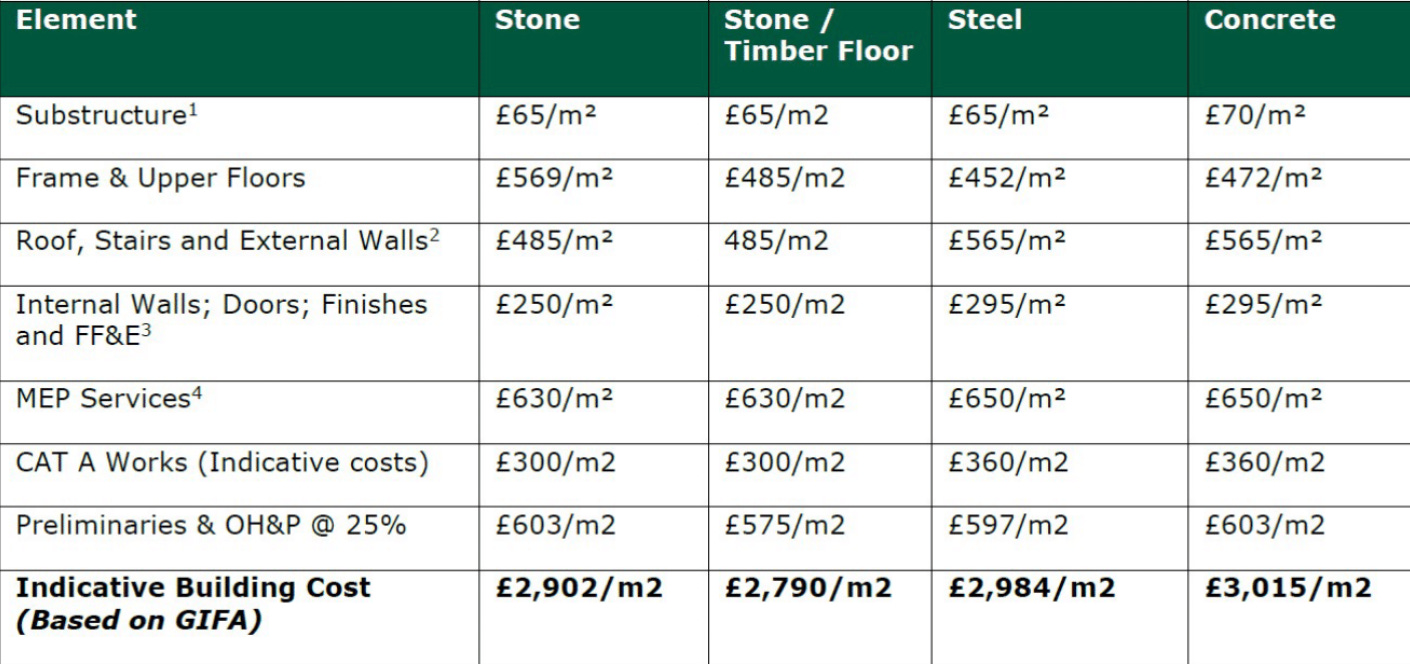
In 2020, “Stone Tower” was a theoretical cost study from Webb Yates and Groupwork in which they modeled a notional 30-story office tower in the UK and found that pre-tensioned stone reinforced with CLT or steel could be cost-competitive with conventional steel and concrete buildings.
The constraint identified in that study was not structural viability but fabrication.
In the US, Monumental Labs is one company singularly focused on automating and integrating the stone supply chain (disclosure: Shadow Ventures is an investor). The company is known for its high-end robotic sculpture and architectural facade work at New York City venues such as Carnegie Hall and The Frick.
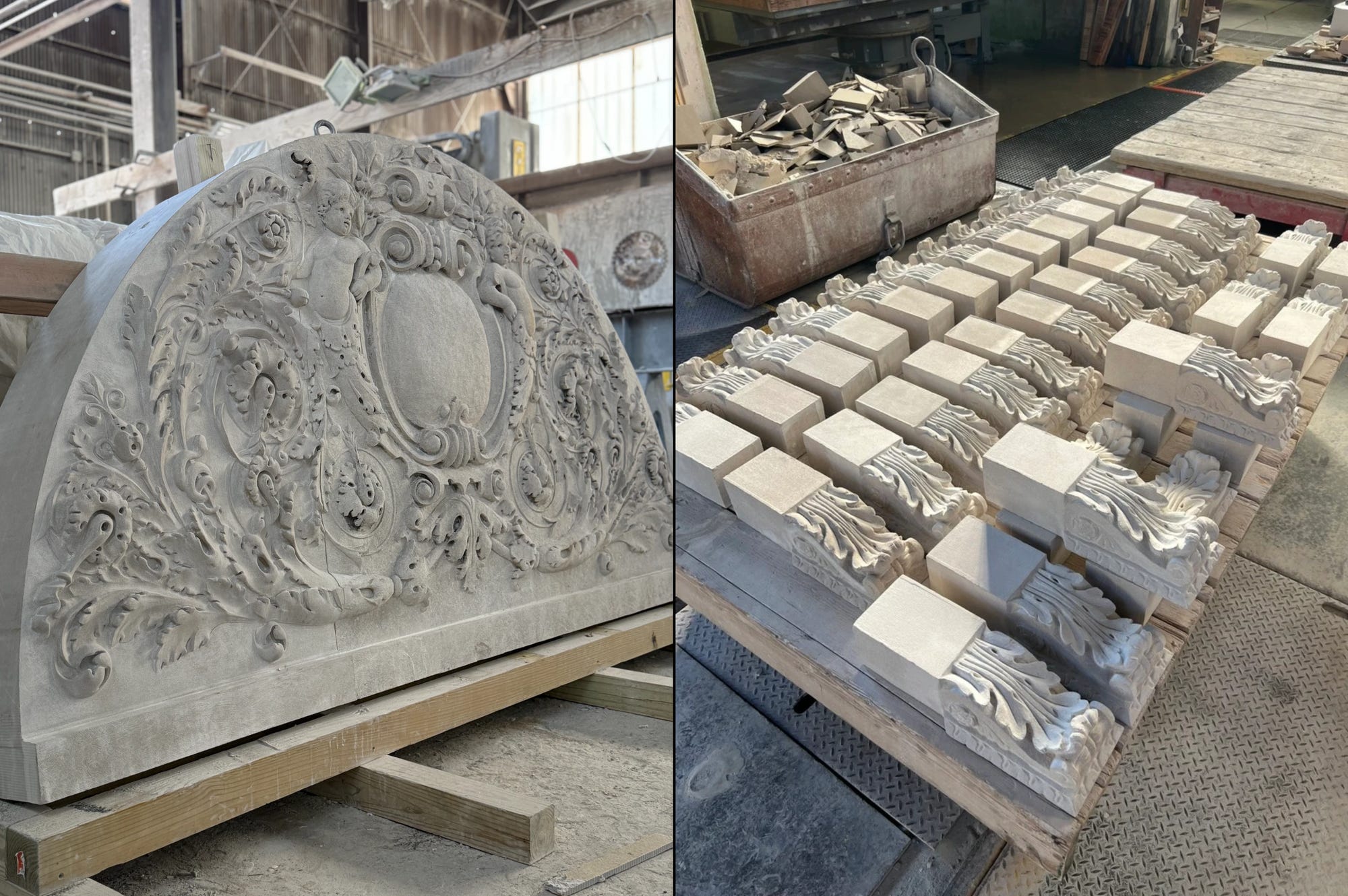
More significant is its effort to reintroduce structural stone systems into construction at scale.
In 2026, Monumental Labs will open a 40,000-square-foot facility in Brooklyn, NY, integrating robotics, automated milling, and prefabrication under one roof.
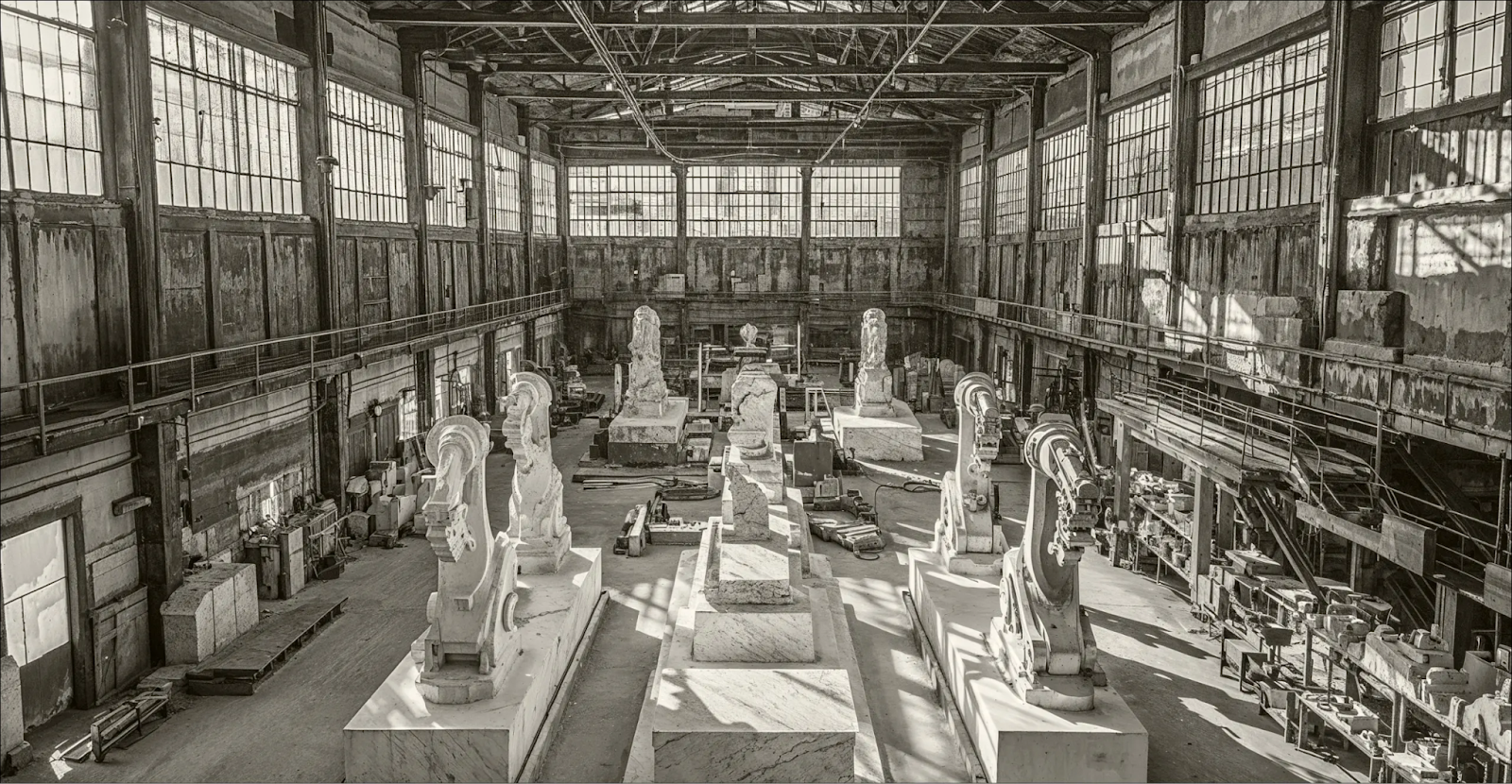
Here, they estimate they can reduce the cost of stone fabrication by 90%. Prefabricated stone reduces installation time and labor intensity, making structural stone economically viable at scale.
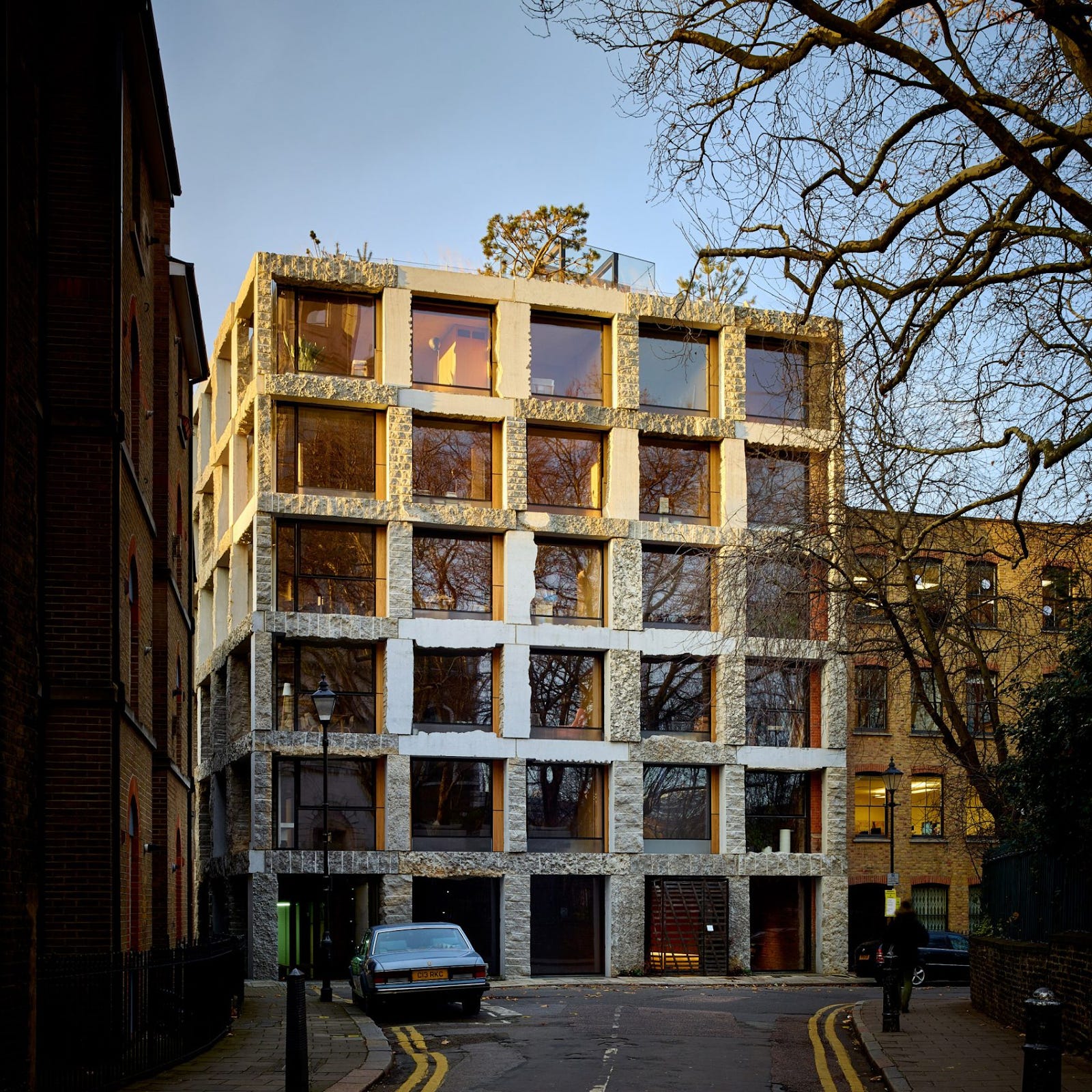
GROUPWORK’s 15 Clerkenwell Close in London proved the concept is buildable. It’s a six-story mid-rise in which the stone walls are load-bearing rather than cladding. Just as important, the cost structure beat out steel and concrete.
Cross-laminated timber follows a similar depth logic as stone. Laminated into thick structural panels and cut by CNC before arriving on site, the material serves as both structure and finished surface. When left exposed, it delivers depth and grain without requiring secondary cladding or finish trades.
For a developer, that means fewer subcontractors and fewer layers of finish work.
Oklahoma developer Austin Tunnell, through his firm Building Culture, builds with twelve-inch load-bearing masonry walls rather than thin veneer systems. Veneer offers an inch or two of projection; a structural wall allows several inches of corbelling and real shadow.
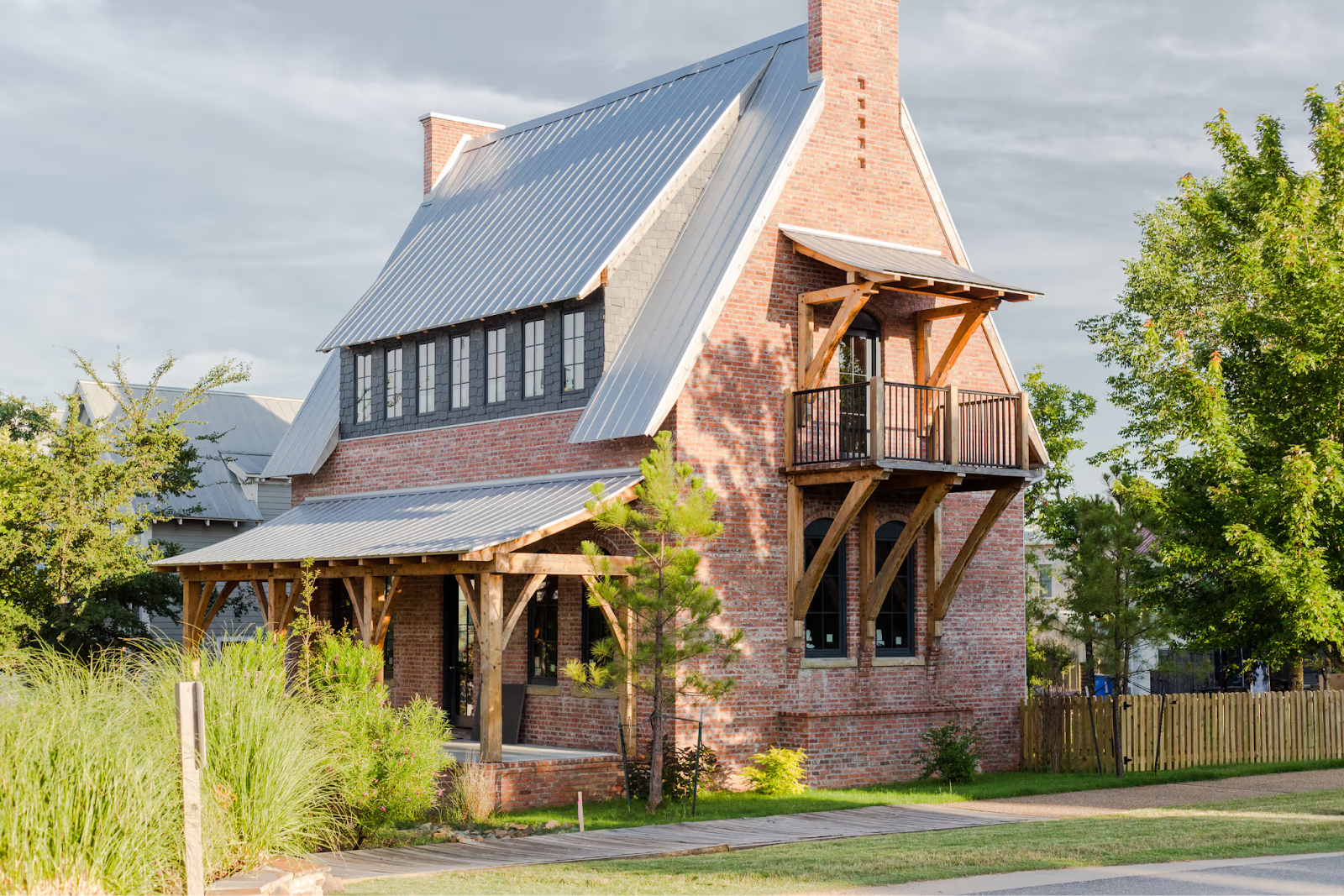
Hand-laid masonry is slow and expensive, but on-site prefab structural framing paired with automated masonry systems can, in theory, make a full masonry building system beat traditional construction costs.
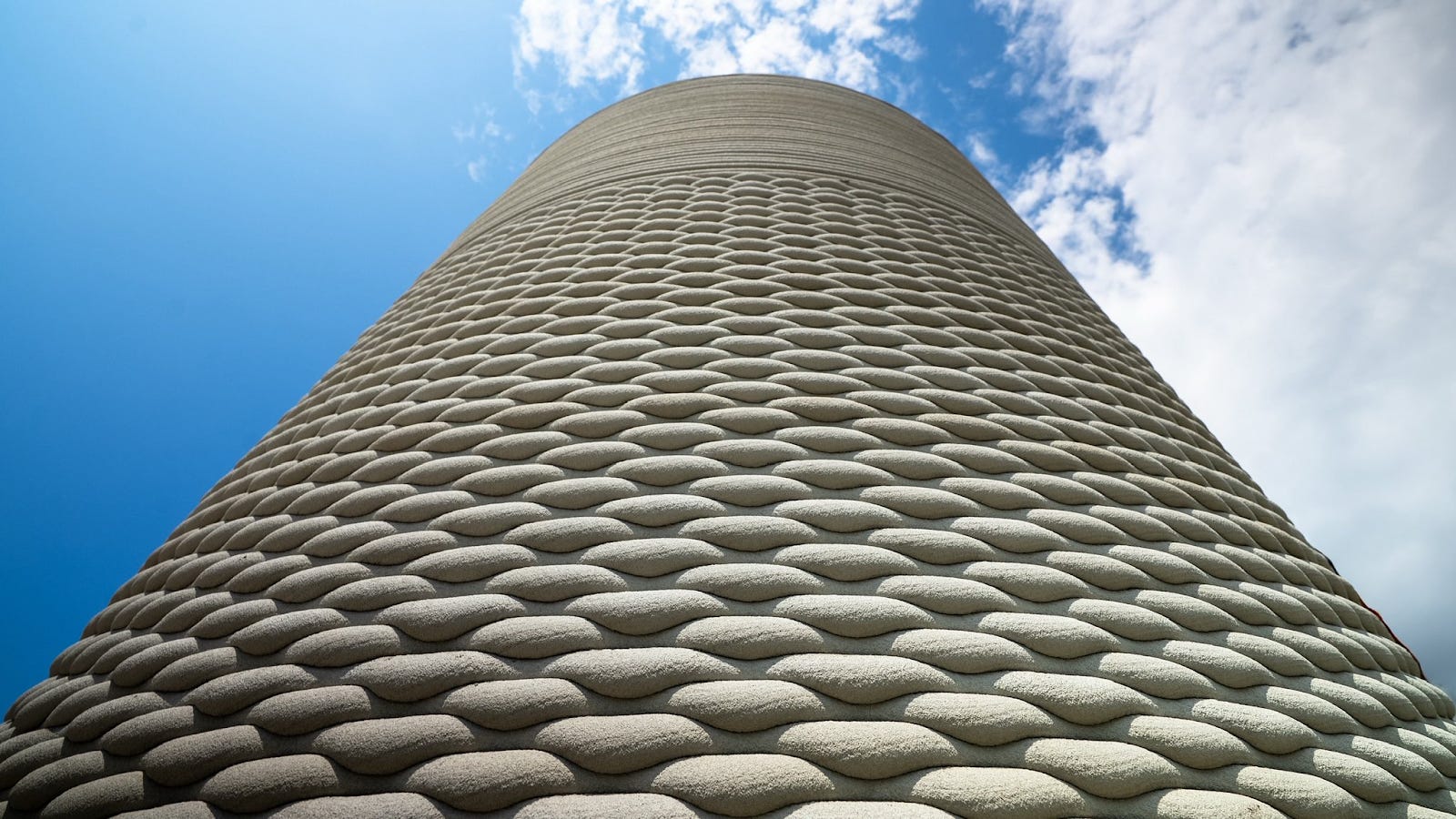
ICON’s 3D-printed concrete looks contemporary but the walls are about 12 inches thick using a double-shell system with insulation in between. The system provides warmth, depth, and unqiue patterns for futurist tastes.
When our built environment doesn’t inspire, the world suffers. This is not a call to legislate taste. It is a call to expand choice.
Right now, most builders and architects face a constrained menu. Structural materials that produce thickness are priced as exceptions rather than defaults. If fabrication and installation costs fall, that constraint changes. Which suggests its a tooling problem. And tooling problems can get solved.
For decades, our financial systems quietly shaped what our buildings became. If new tools can realign cost with longevity, the places we inhabit may begin to feel different again.
Not because we rediscovered beauty, but because we finally made it economical.


